


Most sellers I meet in Connecticut have done the math on their mortgage payoff and stopped there. Then the attorney sends over a settlement statement three days before the table. Suddenly there’s a line for conveyance tax, a line for recording, a line for prorated property taxes on a house they haven’t lived in since March. Yes, sellers pay closing costs in Connecticut, and the bill is bigger here than in most states. Let’s walk through exactly what comes out of your proceeds, what’s negotiable, and where sellers leave money behind.
What Are Closing Costs in Connecticut?
Calling them “fees” undersells the problem: closing costs are every dollar between your sale price and the check you actually carry out of the attorney’s office.
Taxes owed to a government body. Payments to the professionals who carry the sale across the finish line. And prorations, which are just the calendar deciding who owes what for the days each of you owned the place.
A wrinkle other states don’t have is added by Connecticut. Public Act 19-88 requires a Connecticut-licensed attorney to conduct every residential real estate closing where lender’s title insurance gets issued. That one requirement shapes the whole Connecticut closing process, and it puts an attorney fee on both sides of almost every sale.
Anchor yourself to real numbers, since scale matters here. Connecticut’s single-family median hit roughly $490,000 in September 2026, so two percentage points of sloppy estimating means you’ve misjudged your proceeds by the cost of a used car.
How fast things are moving matters too, since a longer marketing period means more months of carrying costs stacked on top of your closing costs. A typical Connecticut listing sits 42 days before it sells or gets pulled, as of October 2026, which is the midpoint. Colonials in Avon and ranches in Wethersfield behave differently from one another, and January is always slower than June.
One more thing worth separating out: your mortgage payoff isn’t technically a closing cost. It’s debt you already owed. Plenty of sellers lump the two together, panic at the total, and conclude they can’t afford to sell.
Who Pays Closing Costs in Connecticut Real Estate?
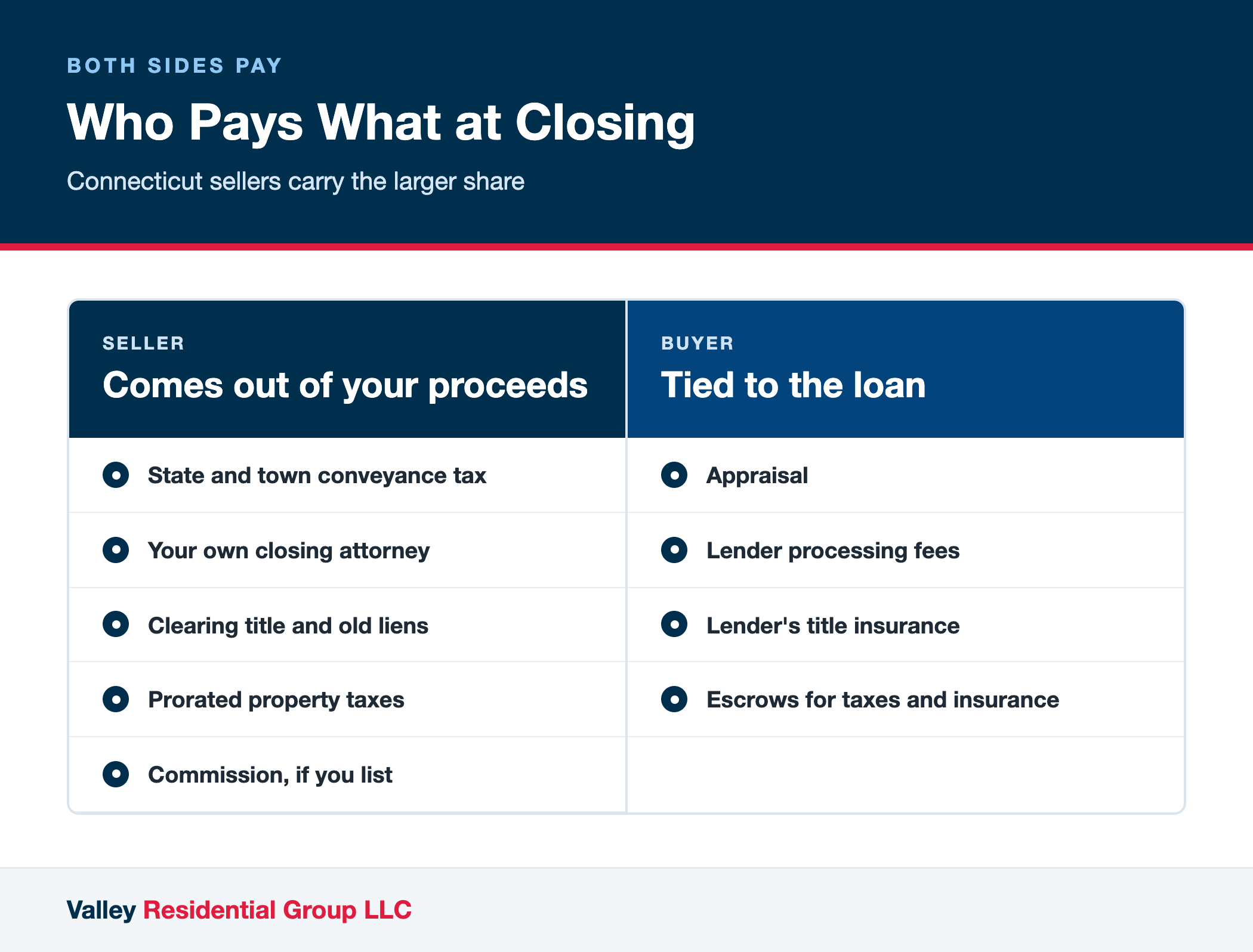
Both sides pay. The split isn’t even close to equal. In Connecticut, sellers usually carry the larger share, including transfer tax, recording fees, and title service fees. Buyers handle the costs attached to borrowing money: appraisal, lender processing fees, their own lender’s title insurance, escrows for homeowners insurance and property taxes.
The conveyance tax is where Connecticut differs sharply from its neighbors, and it lands squarely on you. By statute the tax is payable by the person conveying the property. The town clerk won’t record the deed until it’s paid. The attorney writes that check out of your proceeds before you see a dime.
A couple of years ago I bought a house in Southington from three siblings who’d inherited their mother’s place. They wanted a clean exit, not a six-month sorting project, so we took the whole thing contents and all and they walked away from the cleanout entirely.
What that family understood is something I’d push more Connecticut sellers to think about: who pays the closing costs matters less than what your net looks like after everything. A buyer who covers more of the closing costs but offers twenty thousand less isn’t doing you a favor.
Agent commissions deserve their own note. Listing and buyer’s agent commissions combined are the single largest deduction from most Connecticut sales. They still come out of the same pile at the same table.
What Closing Costs Do Connecticut Home Sellers Pay?
A seller in Glastonbury came to me convinced she’d net about $340,000 on a $400,000 contract. After commission, conveyance tax, attorney fee, and a half-year of prorated taxes, her actual number landed closer to $310,000.
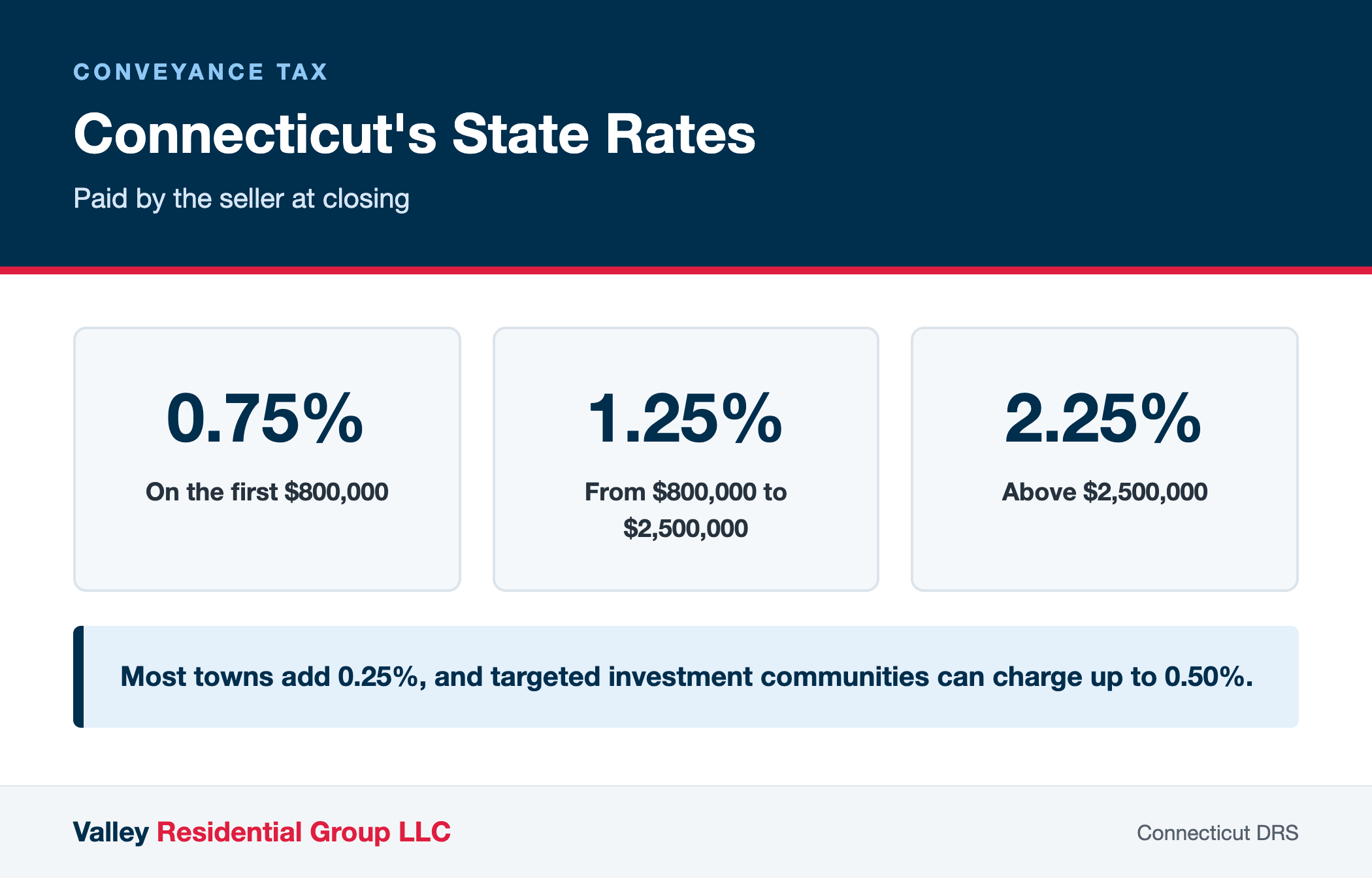
Conveyance tax runs in brackets. Per the Department of Revenue Services, the state charges 0.75% on consideration up to $800,000, 1.25% on the portion between $800,000 and $2,500,000, and 2.25% above that. An additional layer comes from your town on top.
Most Connecticut municipalities keep that local layer modest. The town rate is 0.25% in most places, with a group designated as targeted investment communities permitted to charge up to 0.50%, Hartford among them. I’ve seen sellers budget off the wrong number simply because one town sits next to another with a different rate. Selling in Hartford instead of next-door Wethersfield can shift your closing costs by real money. Ask your town clerk or your attorney for the current local rate before you budget.
Then there’s the attorney. For most residential closings sellers pay their own lawyer a flat fee, and in my view that’s among the best money a Connecticut seller spends. An old mechanic’s lien from a roofing job in 2009, a probate deed missing a signature, a boundary that never got cleaned up after a 1970s subdivision: these are issues. The attorney catches those before they blow up your closing.
Prorated property taxes surprise people, and Connecticut property taxes are nobody’s idea of cheap, especially once you see the proration spelled out on paper. You’ll credit the buyer for the portion of the tax year you owned the home but haven’t yet paid. The billing cycle is set by your town’s collector, so confirm the dates with them rather than assuming.
Condo and HOA sellers should budget for a resale certificate from the association, which takes time to produce and can hold up a closing if you request it late.
Can Negotiations Lower Your Closing Costs?
“If I just refuse to pay the conveyance tax, what happens?”
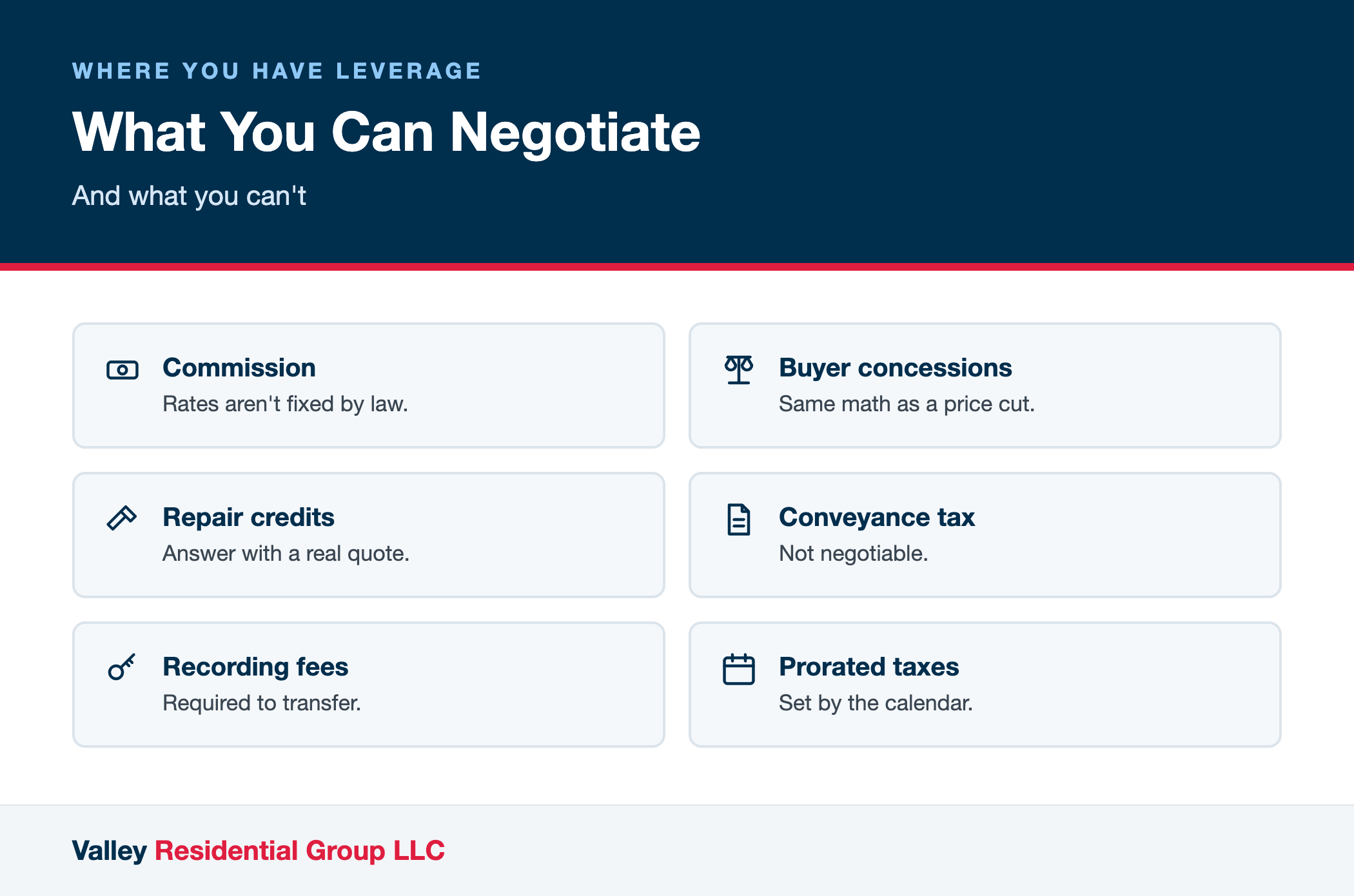
Nothing good. That one isn’t negotiable in any practical sense, since the clerk won’t record without it. Where you do have leverage is on commission, on concessions, and on repair credits.
Commission is the biggest lever and the one sellers push on least. Rates aren’t fixed by law and never have been. This means a listing agent working a well-priced property has room to talk when decent houses in the Hartford suburbs are moving quickly. Ask directly. The worst answer is no.
Buyer concessions are the sneakier piece of your closing costs. In Connecticut, sellers can contribute toward a buyer’s closing costs, subject to caps that vary by loan type. Buyers ask for this constantly when rates are uncomfortable. Agreeing to cover three percent of the purchase price toward a buyer’s closing costs is identical, mathematically, to cutting your price by three percent.
I keep running into the same pattern: sellers negotiate hard on price, win by five thousand, then hand back eight thousand in concessions and repair credits during the inspection period. The win on paper becomes a loss in practice. Negotiate the whole sale, not the headline.
Repair credits are genuinely negotiable and frequently inflated. When a buyer’s inspector flags an aging furnace in a 1952 Cape, the first credit request is usually a wish, so push back on it. Get a real quote from a Connecticut contractor and offer that number instead.
Timing gives you leverage too. If you’re selling into a softer Connecticut pocket or a slow month, concessions will come up. Price accordingly from day one and you’ll argue about closing costs less.
Selling as-is to a direct buyer removes several of these line items completely. The team at Valley Residential Group LLC works this way with Connecticut homeowners who’d rather trade some top-line price for a clean, predictable net.
What Happens Before Closing Day in Connecticut?
For years I told sellers the weeks between contract and closing were mostly waiting; I was wrong, and the sellers who treat that window as active work close on time.
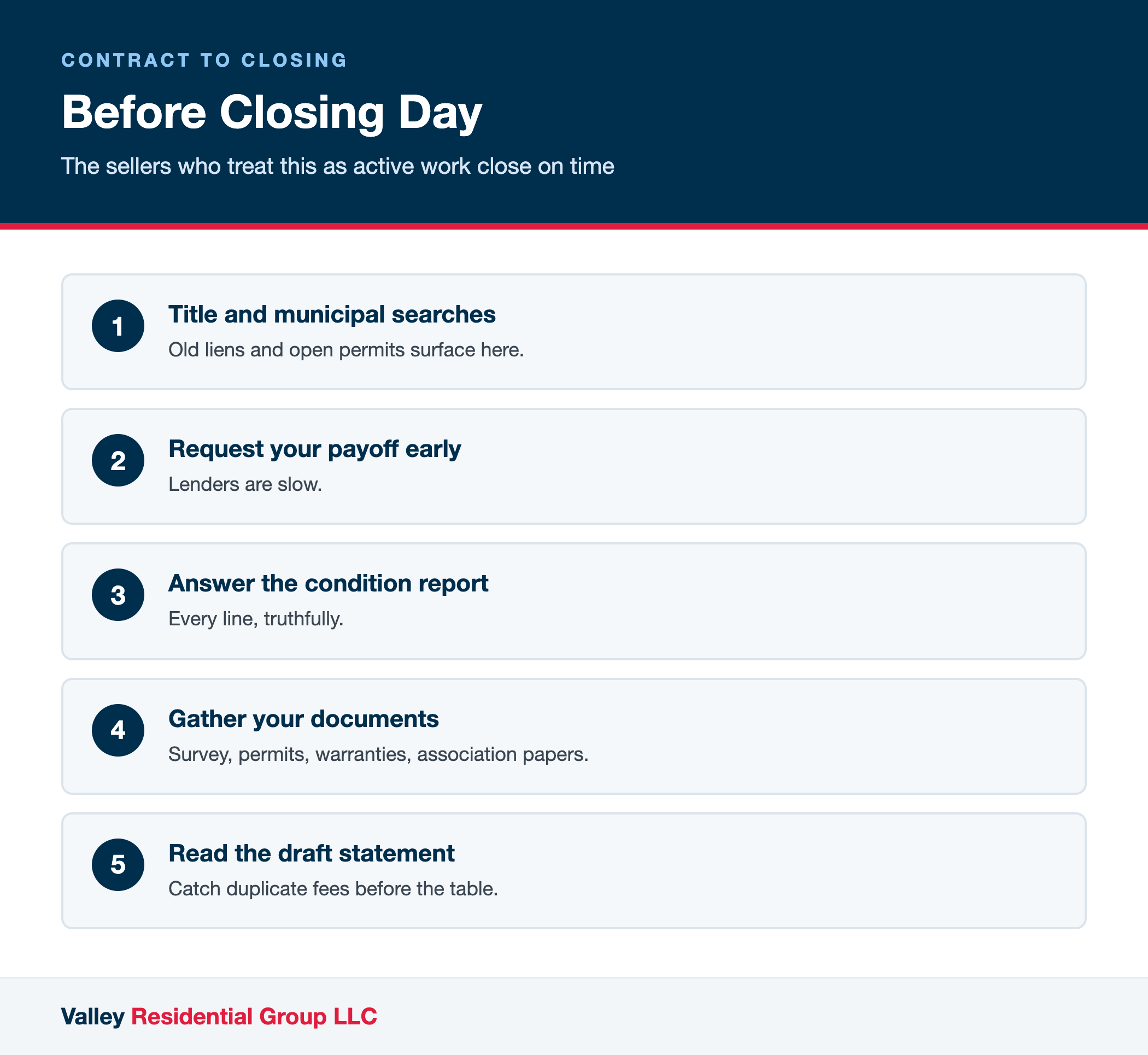
The attorney orders a title search and municipal searches. Those searches turn up anything recorded against your property: old liens, unreleased mortgages, open permits from a kitchen remodel the previous owner never closed out. I’ve seen closings stall for weeks over this exact issue, since open permits are a recurring headache in older Connecticut housing stock. Your building department may need a final inspection before anyone will insure clean title.
Have you pulled your payoff statement yet? Lenders are slow. Request it early so the closing costs on your settlement statement reflect the real number instead of a guess.
Appraisal, underwriting, a final walkthrough. In Connecticut, most of that waiting sits on the buyer’s side, and mortgage financing is the usual culprit when a closing date slips.
Connecticut sellers also owe disclosure. The state’s residential property condition report asks a long list of questions about the house. Sellers who skip it face a credit to the buyer at closing. So it’s worth answering every line truthfully. A disclosed problem is a negotiation; an undisclosed one is a lawsuit.
Get your documents together now, including your survey if you have one, permits for the deck, and warranty paperwork for the roof. Also include association documents if you’re in a condo in West Hartford or a planned community in Farmington. Scattered paperwork is the most common reason Connecticut closings slip a week.
Your attorney will send a draft settlement statement ahead of the table, so go through every line. I’ve watched sellers catch a duplicated recording fee and a stale payoff figure on that draft, and both got corrected before closing because someone bothered to look.
Sellers who are relocating for a job or managing an estate from out of state should flag that early. Mail-away signings and powers of attorney are workable in Connecticut, but they need setup time.
What to Expect on Closing Day
And then it’s finally here, usually in a conference room at a law office somewhere off the Berlin Turnpike or Farmington Avenue, often with little fanfare.
Connecticut closings are attorney-run affairs. Your lawyer and the buyer’s lawyer handle the exchange, the deed gets signed and notarized, and the funds move. Sellers often don’t attend at all. Pre-signing is routine, and it saves you a trip if you’ve already moved to Florida or North Carolina.
What you’ll sign: the deed, the conveyance tax return, the settlement statement, and a handful of affidavits confirming no new liens or work has been done since the title search. Bring every key, every garage remote, every alarm code.
Your proceeds come as a check or a wire. Wires are safer and faster, though your attorney will verify instructions by phone because wire fraud in real estate is real and nasty.
Funding sometimes lags signing by a few hours when a lender is slow. Plan for the possibility that you won’t have money in hand until the next business day.
If you need to stay past closing, that gets negotiated in the contract, not improvised at the table.
A homeowner in Manchester came to me after paying two mortgages for eleven months. He’d bought a place closer to his daughter in Vernon and listed the Manchester house on a Thursday in spring, confident it would move. It didn’t, and he spent nearly a year quietly covering two sets of payments, two oil bills, and two tax bills. The back deck he’d always meant to repair kept scaring off buyers. For sellers in that position, learning how our process works costs nothing and often reframes the math.
Closing Costs Questions Connecticut Sellers Ask Most
Nearly every article on this topic leaves out one detail. Connecticut taxes capital gains at ordinary state income rates, so a long-held Hartford County two-family with a low basis can generate a state tax bill that dwarfs your closing costs. I’ve seen sellers blindsided by this, so talk to a CPA before you sign anything, not after.
This question is worth sitting with. If your Connecticut sale nets you less than you expected, is the problem the closing costs, or is it a price that was set by hope rather than by comparable sales?
Total seller-side closing costs in Connecticut depend heavily on commission. Strip commission out and what’s left is a far smaller pile: conveyance tax, your attorney, recording, prorations, and whatever credits you agreed to. That’s the number to focus on when you’re comparing a listing to a direct sale.
Sellers face extra closing costs on estate and probate sales in Connecticut, including probate court fees tied to the estate’s value. Our guide to selling a house in probate covers those steps. Your probate attorney can give you the current schedule for the court handling your matter.
Frequently Asked Questions
Is It Normal for the Seller to Cover Some of the Buyer’s Closing Costs?
It happens often, especially when mortgage rates make a buyer’s monthly payment tight. A buyer asking you to cover part of their closing costs is really asking for a discount, so evaluate it against your net rather than against the contract price. In competitive Connecticut towns you can usually refuse; in slower pockets, a concession may be what keeps the sale alive.
How Much Would Closing Costs Be on a $400,000 Home in Connecticut?
Run the conveyance tax brackets described above against your sale price, add your town’s local rate, then layer in your attorney’s flat fee, recording charges, and prorated property taxes. If you’re listing with an agent, commission will dwarf everything else on that list. Most Connecticut sellers at that price point land somewhere in the high five figures once commission is included, and in the single-digit thousands without it.
Is $20,000 in Closing Costs a Lot for a Connecticut Sale?
On a home near the statewide median, that figure is in normal territory once agent commission is part of the total. Judge it as a percentage of your sale price rather than as a raw number, and separate the pieces you control from the ones you don’t. Commission and concessions are negotiable; the conveyance tax and recording charges are not.
What Closing Costs Should I Expect When Selling a House in CT?
Plan on the state and municipal conveyance tax, your own real estate attorney, recording fees, prorated property taxes, any association charges if you’re in a condo, and commission if you’ve hired an agent. Add payoff of your existing loan, which isn’t a fee but does come out of the same proceeds. Your attorney’s draft settlement statement is the only document that gives you the exact figures, so ask for it early.
Do Connecticut Sellers Pay for Title Insurance?
The buyer’s lender requires a lender’s title insurance policy, and the buyer typically pays that premium along with any owner’s title policy they choose to add. What falls to you as the Connecticut seller is clearing whatever the title search turns up: releasing old mortgages, satisfying liens, resolving estate issues. Those cure costs can show up on your side of the settlement statement.
Can I Sell a Connecticut House Without Paying Any Closing Costs at All?
Not entirely, since the conveyance tax and deed recording have to be paid for ownership to transfer. You can eliminate most of the rest by selling directly to a buyer who covers the standard closing costs and skips commission, repairs, and concessions. That trade usually means a lower sale price, so compare final net figures side by side rather than comparing offers.
Weighing a listing against a direct sale? We’re glad to run the numbers for your Connecticut town with you and tell you honestly which route serves you better. No pressure, no obligation, and no hard feelings if the answer is that listing makes more sense for your situation.
Seller Closing Costs Around Hartford
Hartford County homes sold for a median of about $412,000 in the third quarter of 2026, according to SmartMLS. At that price, state and town conveyance tax alone runs about $4,100 in most towns before attorney fees and prorations. Our page for Hartford homeowners explains how we buy there.
Talk to Valley Residential Group LLC About Your Sale
Want a real number for what you’d walk away with? Contact Valley Residential Group LLC and we’ll go over your options with you, no pressure. You can also fill out the short form below.
Helpful Connecticut Blog Articles
- How to Sell an Apartment in Connecticut
- How to Sell Your House Rent-to-Own in Connecticut
- How to Sell a House with Termites in Connecticut
- How Long Does It Take To Force the Sale of Property in Connecticut
- Selling a House with Septic Tank Problems in Connecticut
- Selling a House with a Mortgage in Connecticut
- Who pays taxes when selling a House in Connecticut
- Who pays HOA Fee When Selling a House in Connecticut
- How much does it cost to stage a house in Connecticut?
- Can medical bills take your house in Connecticut?