

If you can barely handle your own mess and then someone leaves you an entire house full of theirs, that is a special kind of overwhelming. There are boxes in every room, and somewhere underneath all of it, a property you now legally own and have to do something with.
Most people in this situation have no idea where to start, and that is completely fair. Selling a hoarder house in Connecticut is not like selling any other home. The rules are different, and the buyers are different.
But it is possible, and this article walks you through exactly what you need to know.
What Is a Hoarder House?
A hoarder’s house is a property where the hoarding disorder has taken over. We are talking about years, sometimes decades, of accumulated belongings that have made the home difficult or even impossible to live in normally.
Hoarding disorder is a recognized mental health condition. It is not laziness or carelessness.
People with hoarding disorder feel a strong need to hold onto things and find it genuinely distressing to let them go.
Over time, that leads to blocked hallways and inaccessible rooms. Even systems like plumbing or electrical can go unmaintained simply because no one can get to them.
You might have inherited this property, or you might be selling on behalf of a family member. Whatever the situation, the condition of the home says nothing about you, and it does not have to make this process harder than it already is.
Can You Sell a Hoarder House in Connecticut?
Yes, you can sell a hoarder house in Connecticut. No law prevents you from selling a home in poor or heavily cluttered condition. You just need to be upfront about the property’s condition and choose a selling method that fits your situation.
The traditional real estate market is a tough crowd for hoarder homes. Most retail buyers want something move-in ready. Lenders are notoriously picky about financing homes that fail basic safety or accessibility standards.
That shrinks your buyer pool significantly.
But it does not make the home unsellable. Cash home buyers in Connecticut and real estate investors specifically look for distressed properties like this.
They are not scared off by clutter or damage. They don’t need lender approval to close, either.
So yes, selling a hoarder house in Connecticut is very much possible. It just looks a little different than a typical home sale.
Why Is Selling a Hoarder’s Home More Complicated Than a Regular Sale?
Selling a regular home is already a whole thing. Add years of accumulated clutter and hidden damage, and you have got yourself a completely different animal.
Hoarding Disorder Takes a Toll on the Property
It is easy to think the clutter is the whole problem. Clean it out, and you are good, right? Not quite.
When a hoarding disorder has had years to settle into a home, the damage goes way deeper than the stuff you can see.
Maintenance gets ignored because you cannot even get to the things that need fixing. Pipes leak behind walls nobody has touched in a decade. Floors quietly buckle under the weight they were never built to hold.
The clutter is the headline, but the structural damage is the real story.
Hidden Damage Lurks Behind the Clutter
You go in expecting a big cleanout and come out the other side staring at water damage, mold, and pest damage that was hiding underneath everything the whole time.
It does not mean the home is unsellable. It just means you want to know what you are dealing with before you commit to a plan.
Lenders Often Refuse to Finance Hoarder Homes
Most buyers need a mortgage, and most lenders will not approve financing on a home that does not meet basic safety and habitability standards.
A hoarder house rarely does, and that cuts your buyer pool dramatically before you even get to the listing stage.
Inspections Are Difficult to Complete
Inspectors need access to walls, floors, electrical panels, and attics. In a hoarder’s home, most of that is buried under years of stuff.
An incomplete inspection makes buyers nervous, and nervous buyers either disappear or lowball you hard. It is a tough cycle to break when you are trying to go the traditional route.
Dangers That Come With a Hoarder’s Home
Hoarder homes are not just messy. In many cases, they are genuinely hazardous. Here’s what you’re walking into.
Health Hazard
The air inside a heavily hoarded home is not great. There are mold spores, dust, and years of built-up allergens that create an environment that hits you the second you walk in.
People with respiratory issues feel it immediately, but even perfectly healthy adults can start having reactions after spending any real amount of time inside.
This is not just an “open a window” situation. In severe cases, the air quality alone makes the home unsafe to occupy without proper protection.
Fire Hazards
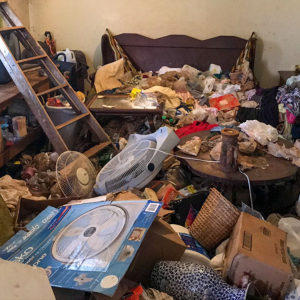
Stacked paper, fabric, and boxes, packed wall-to-wall, are basically kindling. A small spark in a hoarded home does not stay small for long.
And the exits? Usually blocked. That turns a bad situation into a genuinely dangerous one fast for anyone inside, whether a family member, a cleaner, or a buyer doing a walkthrough.
Structural Risks
Hoarded belongings are heavy, and that weight adds up over the years. Floors sag. Foundations take on stress they were never designed for.
We have walked into homes where you could literally feel the floor shifting under your feet. That kind of damage is not cosmetic. It is expensive, and it does not get better on its own.
Bacteria and Biohazard Concerns
In more severe hoarding situations, you are sometimes dealing with human or animal waste, rotting food, and other material that goes well beyond what a standard cleaning crew can handle.
Biohazard remediation is its own specialized service, and it costs accordingly. It is not something to cut corners on.
Pest and Rodent Infestations
Rodents and roaches thrive in hoarder homes. The warmth and endless places to hide make it ideal for them.
By the time you spot the signs, the infestation has almost always been going on for a while. Serious infestations need professional extermination and remediation before the home is safe for anyone to spend real time in.
Should You Fix the Hoarder House or Sell It As-Is?
For most people in this hoarder house situation, selling as-is is the best course of action. Fixing it up sounds great in theory until you actually start pricing it out.
A full cleanout alone can run anywhere from a few thousand to well over $10,000. Then the cleanout reveals damage. The damage needs repairs. The repairs uncover more problems.
It snowballs, and before you know it, you are way deeper than you planned.
By the time you add up the cleanup, pest remediation, structural repairs, and cosmetic updates, you might have spent more than the home will ever return on the open market.
We have sat down with sellers who were dead set on fixing everything first. We ran the actual numbers with them and watched their whole plan change in about ten minutes.
Sometimes, selling as-is is not just the easier choice. It is the smarter one.
Can a Hoarder House Be Condemned in Connecticut?
Yes, a hoarder house can be condemned in Connecticut.
Connecticut local authorities can condemn a property if it is deemed uninhabitable, and a severely hoarded home checks a lot of those boxes. Those mold, structural damage, blocked exits, and waste infestation can trigger it.
It usually starts with something small, such as a neighbor’s complaint, a routine check, or an emergency call. Once code enforcement gets involved, the owner has a set window to fix things, or it escalates fast.
Authorities do not jump straight to condemnation. They typically work with owners first. But if you have been putting off dealing with an inherited hoarder property, do not wait too long.
Getting it sold as-is is better than letting it sit until someone else decides what to do with it.
How to Sell a Hoarder House in Connecticut
You have three main options when selling a hoarder house in Connecticut, and the best choice really depends on your situation.
Selling With a Real Estate Agent
This one works, but it comes with a catch. Most agents will want the home cleaned up and presentable before they can do much with it.
That means you are back to dealing with the cleanout and the repairs. You’ll deal with all the costs that come with it before you even list.
Finding an agent who has actually sold hoarder homes before makes a big difference. Not every agent knows how to handle this, and the wrong one will cost you time and money.
Commission fees on top of everything else also add up. Just something to keep in mind going in.
Selling the Home For Sale By Owner
Some sellers go this route to avoid paying agent commissions, and it can work. But marketing a hoarder home on your own is genuinely tough.
You are responsible for pricing it right and finding buyers. You’ll also handle all the paperwork and negotiate everything yourself. That is a lot to manage, especially when dealing with a property in this condition.
It is possible, but it is not for everyone.
Selling to a Cash Buyer
This is the route that tends to make the most sense for hoarder homes, and we say that having seen how the other options play out firsthand.
Cash for houses company in Hartford, CT, and other nearby cities, purchases the home as-is. They don’t require cleanouts or repairs. You get an offer and agree on a close date. That is pretty much it.
The offer might be lower than what you would get on the open market after a full renovation. But when you factor in everything you are not spending to get there, the gap is usually a lot smaller than it looks.
Why Hoarder Homes Struggle in the Traditional Market
If you put a hoarder house on the traditional market, you’re going to feel it pretty quickly. It is not that it cannot sell. It is that the traditional market was simply not built for homes like this.
No Interior Photos Worth Using
Listing photos make or break a sale online, and a hoarder’s home is almost impossible to photograph well. Even after a cleanout, stains, damaged flooring, and worn walls tend to show up clearly on camera.
Buyers love scrolling. If the photos do not grab them, they keep moving. And with a hoarder home, getting photos that actually attract buyers is a real challenge.
Open Houses Are Off the Table
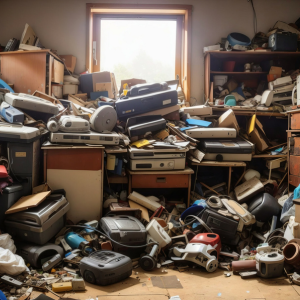
You cannot hold an open house in a heavily hoarded home. The safety hazards alone make it a liability issue. Exposing potential buyers to mold or biohazard conditions is not something any responsible seller should do.
That takes one of the most effective traditional selling tools completely off the table.
The Buyer Pool Is Much Smaller
Most buyers want move-in ready. The ones who are open to a fixer-upper still need financing. However, lenders will not approve a mortgage on a home that does not meet basic habitability standards.
That leaves you with a very small pool of buyers who have cash and are comfortable with the condition. They’re the ones willing to take on everything that comes with it.
Long Days on Market Drive Down the Price
When a home sits, people notice. The longer a hoarder house stays listed without selling, the more buyers assume there is something seriously wrong with it beyond what they can already see.
That perception drives offers down. And the longer it sits, the worse it gets. It is a cycle that is really hard to pull out of once you are in it.
Steps for Selling a Hoarder House in Connecticut
Having a clear order makes the whole thing a lot less chaotic. Here is what the process actually looks like.
Sort Out Ownership First
This sounds obvious, but you would be surprised how many people forget this part.
If you inherited the property, ownership might not be as clean as you think. There could be multiple heirs or liens on the property that nobody knew about.
If you find out about a title problem when you are already in the middle of a sale, it will be very stressful. Deals fall apart over this.
Get a title search done early and sort out any issues. That way, you go into the sale knowing exactly where you stand legally.
Take an Honest Look at the Property
Don’t do the “it is not that bad” walkthrough you do when you are trying to stay optimistic.
Walk through every room. Open every door you can access. Look at the ceilings, the floors, and the walls. If you can get to the basement or attic, do it.
Bring someone with construction experience if you have that connection, because they will spot things you will completely miss.
This step is super important because it shapes every decision after it. You cannot price the home right and choose the right selling path.
Moreover, you won’t know what you are disclosing if you do not actually know what is there.
Decide How You Are Selling Before You Spend a Single Dollar
This is the mistake we most often see. Someone inherits a hoarder house, panics, and immediately starts hiring cleaners and hauling stuff out before they have even decided how to sell.
Then they find out they are going with a cash buyer who would have taken it as-is anyway, and they just spent five thousand dollars for nothing.
Nail down your selling route first. If you are going the traditional route with an agent, yes, you will need to clean up.
If you are selling to a cash buyer, you probably do not need to touch a thing. The order of operations saves you money.
Disclose What You Know
Connecticut law requires sellers to disclose known material defects, and with a hoarder house, that list is likely going to be long. There’s mold, pest damage, structural issues, and water damage.
Many sellers get nervous about this part, but being upfront is always the right call.
Buyers who know what they are getting into are far less likely to renegotiate or walk away later. The ones who feel blindsided are the ones who cause problems.
Honest disclosures protect you legally and keep the deal intact. It is not optional anyway, so lean into it.
Compare the Full Picture, Not Just the Offer Price
When offers start coming in, do not just look at the number on the page. That is the rookie mistake.
A high offer from a traditional buyer who needs financing could end up netting you far less than a lower cash offer with no contingencies and a two-week close.
Sit down and make calculations. Subtract the cleanup costs, the repair bills, the agent commission, and the months of carrying costs like utilities, taxes, and insurance while the home sits on the market. Then compare. Most people are genuinely surprised by what they find.
How to Price a Hoarder House in Connecticut
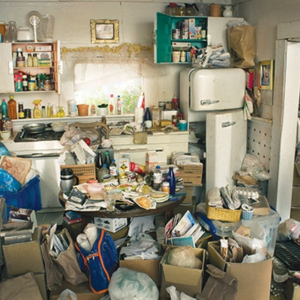
A hoarder house is going to be priced below market value, and that is just the reality. What you are figuring out is how far below, and that depends on what a buyer would actually need to spend to bring it up to neighborhood standard.
Some factors that will affect your pricing are cleanup, pest remediation, repairs, and cosmetic updates.
Start with comparable sales nearby, then work backwards from the cost of everything that needs fixing. If you are talking to cash buyers, they are already doing this math.
Understanding it yourself means you can tell whether an offer is fair instead of just taking someone’s word for it.
Get a professional opinion from someone who has actually handled distressed properties. A general appraiser who has never touched a hoarder’s home will not give you an accurate number, and that cuts both ways.
Do You Need a Real Estate Attorney to Sell a Hoarder’s House in Connecticut?
In Connecticut, real estate attorneys are a standard part of the closing process anyway, so this is less of a choice and more of a given.
For a hoarder house, though, a good attorney is even more valuable. Those title issues and estate complications get more layered when the property has a complicated history.
If you inherited the property, an attorney is basically non-negotiable. Confirming ownership and making sure everything is legally clean before the sale is not something you want to figure out on your own mid-deal.
The cost is worth it. A real estate attorney in Connecticut typically runs a few hundred to around a thousand dollars for a closing, which is nothing compared to what a legal mess mid-sale can cost you.
How Do Cash Buyers Make Selling a Hoarder House in Connecticut Simple?
The whole point of a cash buyer is that they want the property exactly as it is. They’ll deal with the damage and all the stuff left behind. You do not clean or make repairs. You do not stage anything. You just get an offer and pick a closing date.
We have closed on homes where the seller walked out with whatever they personally wanted to keep and handed over the keys. That was the entire process for them.
The offer will not match what a fully renovated home would fetch on the open market, and that is just honest. But when you actually subtract the cleanup costs, repair bills, agent commissions, and more, the gap gets a lot smaller than most people expect.
And beyond the numbers, there is something to be said for just being done with it. For a lot of the sellers we have worked with, that peace of mind ended up being worth just as much as the offer itself.
Frequently Asked Questions
Is it easy to sell a hoarder house in Connecticut?
Easy is relative. It is not as simple as selling a move-in-ready home, but it is far from impossible. The process gets a lot smoother once you know your options and stop trying to force a hoarder house into a traditional sale. People do this successfully all the time.
Do hoarder homes sell for less?
Usually, yes. The condition affects the price, and that is just reality. But the gap between what you get and what you would have gotten after a full renovation is often smaller than people expect once you subtract all the money you are not spending on cleanup, repairs, and commissions.
Who buys hoarder houses in Connecticut?
Cash buyers and real estate investors are your most realistic pool. They are comfortable with distressed properties. They do not need lender approval and are not scared off by clutter or damage. Some traditional buyers will take on a hoarder home, but they are rare, and the financing hurdles are significant.
Do I have to clean out the hoarder’s house before selling?
If you are selling to a cash buyer, almost certainly not. Most cash buyers take the property exactly as it stands, stuff and all. If you are going the traditional route with an agent, you will likely need to do at least a partial cleanout to get the home presentable enough to list.
How long does it take to sell a hoarder house in Connecticut?
It depends entirely on how you sell. A cash sale can close in as little as two weeks. A traditional sale with a full cleanout, repairs, and time on the market can take anywhere from several months to over a year. Most sellers we have worked with who went the cash route were genuinely shocked by how fast it moved once they made the decision.
Key Takeaways: Selling a Hoarder House in Connecticut
Hoarder houses can be really challenging to sell, but the biggest mistake most sellers make is overcomplicating it. You need to take the time to understand your options before spending money on cleanup. Get your ownership sorted and compare offers based on the full picture, not just the price on the page.
When you are ready to move forward without the headache of repairs, cleanouts, or months of waiting, Valley Residential Group LLC buys hoarder homes in Connecticut exactly as they are. Contact us at (860) 589-4663 or fill out the form below to get a real number on your property today.
Helpful Connecticut Blog Articles
- Documents Needed to Sell a House in CT
- How Long After an Appraisal Can You Close in Connecticut?
- Should I Replace My Roof Before I Sell My House in CT
- How to Sell A Condemned House in Connecticut
- How to Sell Your Parents’ House in Connecticut
- Selling a House in a Trust After Death in Connecticut
- Documents Required for Selling Inherited Property in Connecticut
- How Long to Live in a Home Before Selling in Connecticut?
- Cheapest Places to Live in Connecticut
- Sell Your House in 7 Days in Connecticut
- How to File a Quitclaim Deed in Connecticut
- Who Pays for Appraisal and Inspection in Connecticut
- Can You Sell a House in Foreclosure in Connecticut?
- How To Sell A House During Divorce in Connecticut
- Sell a House in Probate in Connecticut
- Can I Sell My House With a HELOC in Connecticut
- How to Sell a House Without a Realtor in Connecticut
- Selling a Hoarder House in Connecticut